SEO for AI answers: getting cited by ChatGPT, AI Overviews and Alice
In the spring a client asked me, “Why does ChatGPT recommend our competitors and not us?” I didn't have a good answer then. I pieced one together over the summer, and this article covers what we now do for sites that want to show up in AI answers.
 Azamat AbduyaminovFounder, lead engineer
It wasn't an idle question. More and more people looking for a contractor in Uzbekistan, foreigners especially, start not with a search engine but by asking an AI: "recommend a law firm in Tashkent that works on energy projects". If you're not in that answer, they may never reach your site at all.
I started with something simple: once a week I ask ChatGPT, Gemini, Google and Yandex's Alice the same questions about lawyers, clinics and printing companies in Tashkent, in three languages, and note which sites they cite. The sample is small, the results jump around from week to week, and I'm not going to pretend it's statistics. But patterns are visible.
What changed in a year
Search started answering by itself. In Google, an AI Overview increasingly sits above the links; in Yandex, Alice answers with Neuro; and some people don't open a search engine at all and go straight to ChatGPT. The user gets an answer and doesn't click anywhere.
For a site owner this means two things. Clicks from search on informational queries will drop, and there's nothing you can do about that. On the other hand, if an AI cites your site as a source, the person who does click arrives already warm: they've read the answer and want the details.
The good news is that AI systems didn't invent a separate internet of their own. They take their sources from search indexes.
| Where the answer appears | Where it gets sources | What matters for the site |
|---|---|---|
| Google AI Overviews | Google's index | Regular Google SEO, structured data |
| ChatGPT with search | Bing's index and OpenAI's own crawler | Being indexed in Bing, not blocking OAI-SearchBot |
| Alice and Neuro | Yandex's index | Yandex Webmaster, Russian-language pages |
| Perplexity | Its own search | Clean HTML, clear facts |
Which leads to the first conclusion, one plenty of people don't like: if a site is poorly indexed in regular search, no "SEO for AI" will save it. You start with the basics, which I covered in the post on SEO for a website in Uzbekistan.
Which pages AI systems cite
From what I've seen, they don't cite the "most optimised" pages; they cite the least ambiguous ones. An AI looks for a sentence it can lift into its answer without worrying about getting it wrong.
Facts, not promises
"We provide high-quality legal services" says nothing. "The firm advises on project finance in energy and construction in Uzbekistan and Central Asia" is a fact that can be quoted. The more specifics a page has (which services, where, for whom, since when, who is responsible), the better its chances of being picked as a source.
Clear structure
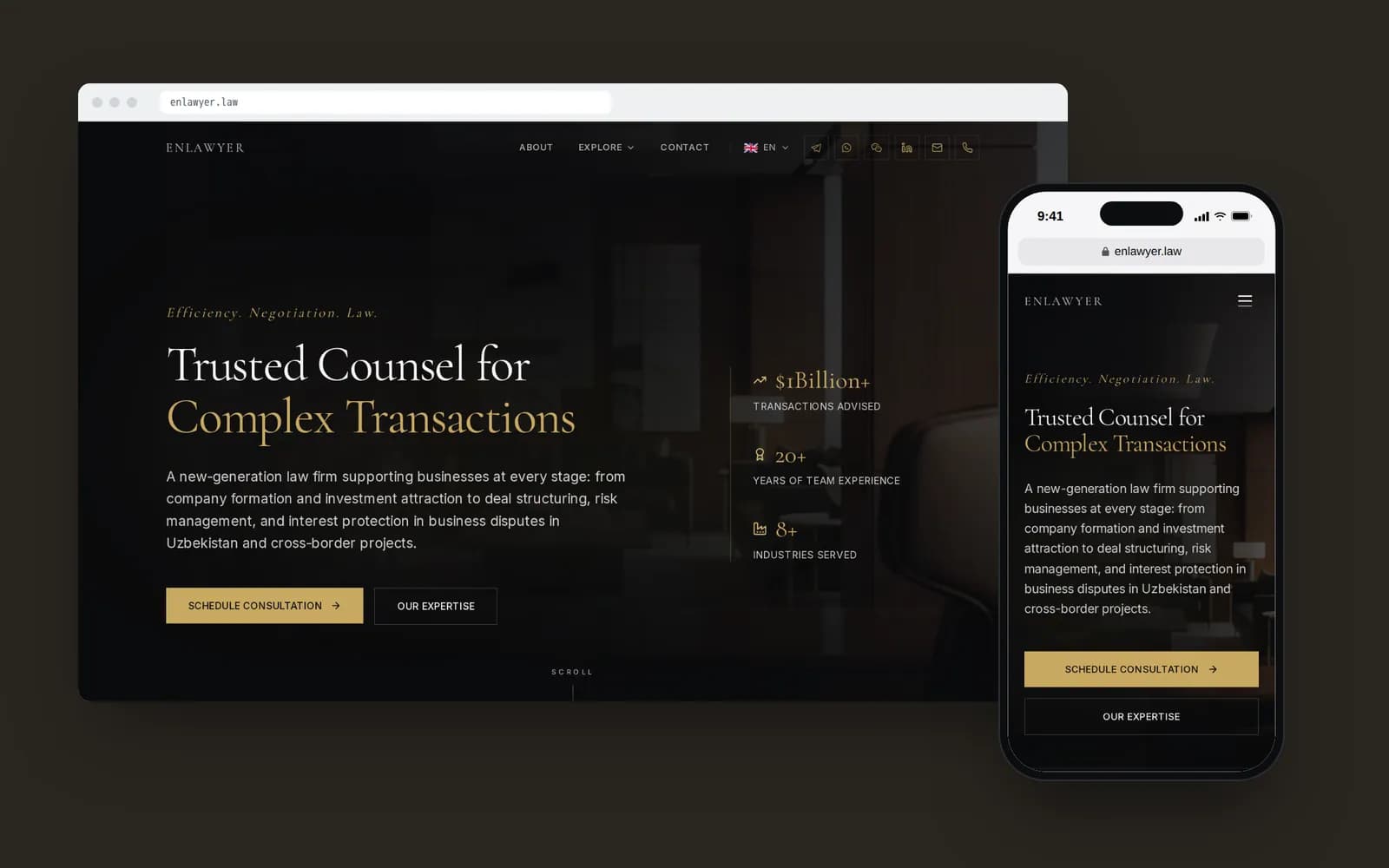
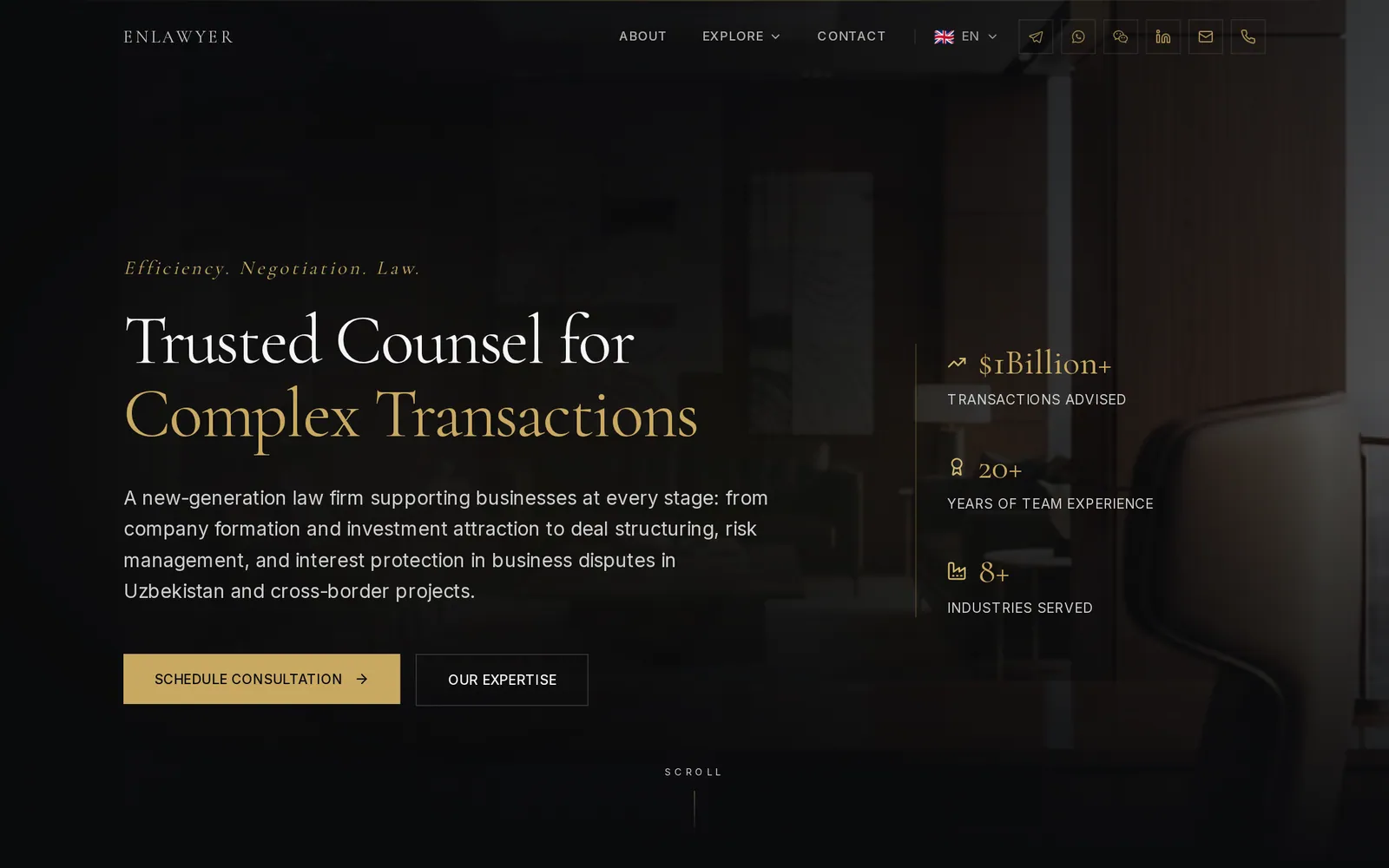
A page with headings, where each section answers one question, is far easier for a machine to parse than a wall of text. On Enlawyer we added a table of contents to every article in the Insights section, built automatically from the headings. It was originally for readers, but the side effect proved useful: each section has its own anchor, and you can link to it.
An author with a name
For lawyers, doctors and finance people this matters especially. An article without an author is text from who-knows-who. An article whose author has their own page, title and experience is a specialist's opinion. Google has said this in its guidelines for a long time, and AI systems seem to inherit the same logic.
Structured data: what we do
schema.org markup doesn't guarantee a citation. But it removes ambiguity: the machine doesn't have to guess which part of the page is the firm's name and which is a lawyer's.
On Enlawyer our setup looks like this. The organisation is described once as a LegalService with a permanent @id. Each lawyer on the team pages is marked up as a Person and points to the organisation through that @id. Practices are marked up as Service, articles as NewsArticle, and there's a BreadcrumbList everywhere.
{
  "@context": "https://schema.org",
  "@type": "Person",
  "name": "First Last",
  "jobTitle": "Partner, Banking and Finance",
  "url": "https://enlawyer.law/team/...",
  "worksFor": { "@id": "https://enlawyer.law/#organization" }
}
The key part is worksFor pointing at the @id. Without it, your site has "some organisation" in one place and "some people" in another. With it, you get a connected graph: here's the firm, here are its partners, here's what they write. (The @id value in the example is illustrative; the live site uses its own.)
Uzbek as an advantage
This is probably the most interesting observation. In Russian and English, most topics have plenty of sources, and breaking into the citations is hard. In Uzbek, good sources are scarce. AI systems answer worse in Uzbek, often translate from Russian, and will happily cite any decent Uzbek page if one exists.
For businesses in Uzbekistan that's an opening. But only if the Uzbek version of the site consists of real pages with their own URLs, not machine translation hidden behind a switcher. We have a separate article on setting up three languages properly.
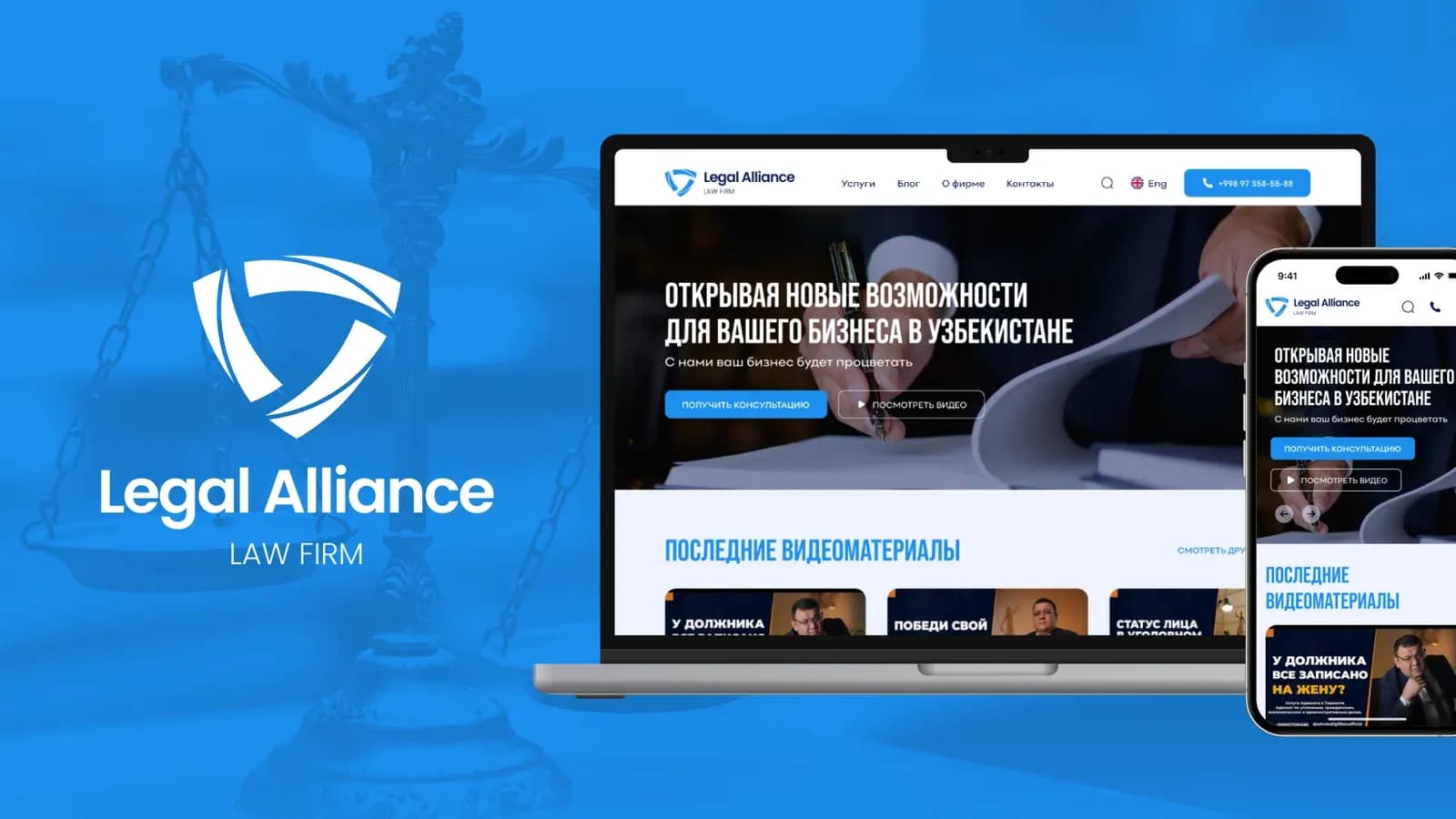
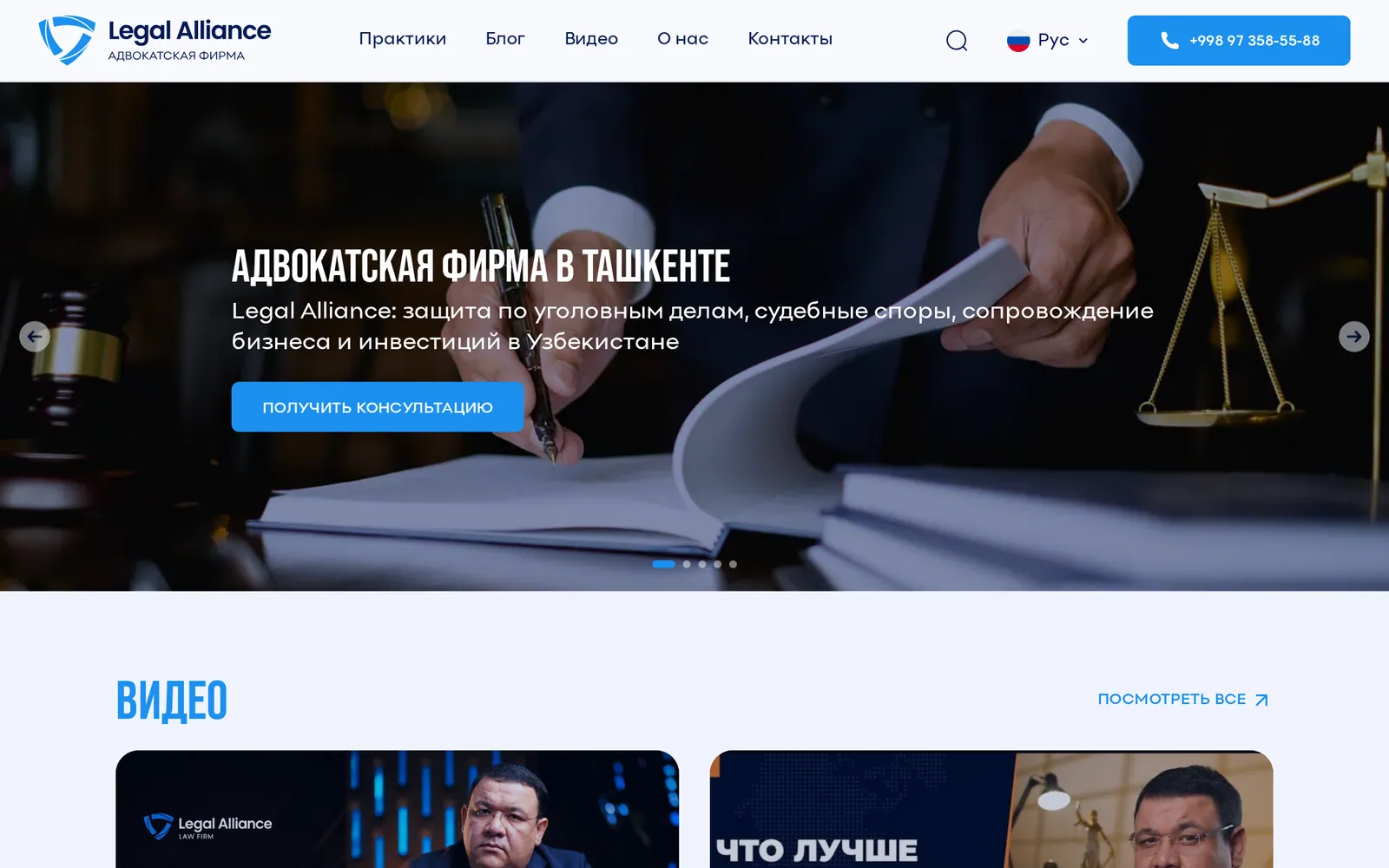
On Enlawyer, every piece of content has its own URL and its own slug in each language, and the markup lists the language versions. The Legal Alliance site, which we've been running since 2022, has accumulated a lot of material: more than 20 years of company history, practices, news, video. For sites like this, the main job now isn't a redesign; it's making that accumulated material unambiguous: every lawyer gets a page, every practice a concrete description, every news item an author and a date.
Where to start today
Here's how we now approach a site that wants to show up in AI answers:
- Check indexing. Google Search Console, Yandex Webmaster and Bing Webmaster Tools. Many people skip the last one, yet ChatGPT relies on Bing's index among other sources.
- Check robots.txt. Don't block the crawlers search depends on: Googlebot, Bingbot, YandexBot, OAI-SearchBot. You can opt out of model training separately if the client wants; those are different bots.
- Rewrite key pages with facts. Who you are, what you do, where, since when, for whom. No "market leader" and no "individual approach".
- Create pages for people. Name, title, experience, photo, links to the articles they've written.
- Mark up the structure. Organization or LocalBusiness with a permanent
@id, Person, Service, Article, BreadcrumbList, and FAQPage where there genuinely are questions and answers. - Add Uzbek content as full pages. With their own URLs and hreflang.
- Ask clients where they came from. In analytics, a visit from ChatGPT often looks like direct traffic. Asking "how did you find us?" in the Telegram chat is still more reliable than any tracking tag.
If I could, I'd put step seven first. Without it, you'll never know whether the rest is working.
What to check on every important page
- Does the first paragraph directly answer the question the page exists for
- Are the city, country, specific services and years stated, rather than generalities
- Is there an author or responsible person, linked to their page
- Is the publication or update date visible
- Does the markup pass the Rich Results Test without errors
- Does the text load without JavaScript, i.e. is it rendered on the server
- Is there an Uzbek version with its own URL
What I still don't know
I don't know how stable any of this is. Models are updated every few months, and something cited in May can vanish in August for no visible reason. Tracking citations by hand is tiring, and the tools for it are still raw and expensive.
But I've noticed one thing: everything that helps you get into AI answers also helps regular search and real readers. Specific facts, clear structure, real authors. So I don't see "SEO for AI" as a new service. It's the same SEO, just with no room left for filler.
If you want to see how your site looks to AI systems, have a look at what our SEO work includes, or message me on Telegram at @Azamat_yamin.